


The cheapest way to travel around the US is usually by bus: tickets between nearby cities often cost $17 to $50. For 2 or more people, driving and splitting the gas can cost even less. Trains are cheap only with early Saver fares, and flying wins only on long distances, booked early.
Prices changed a lot in 2026. The average US domestic airfare hit a record $445 in the spring, and gas is about $1 a gallon more than a year ago, so the cheapest way to travel in the USA depends on the distance and how many of you are going.
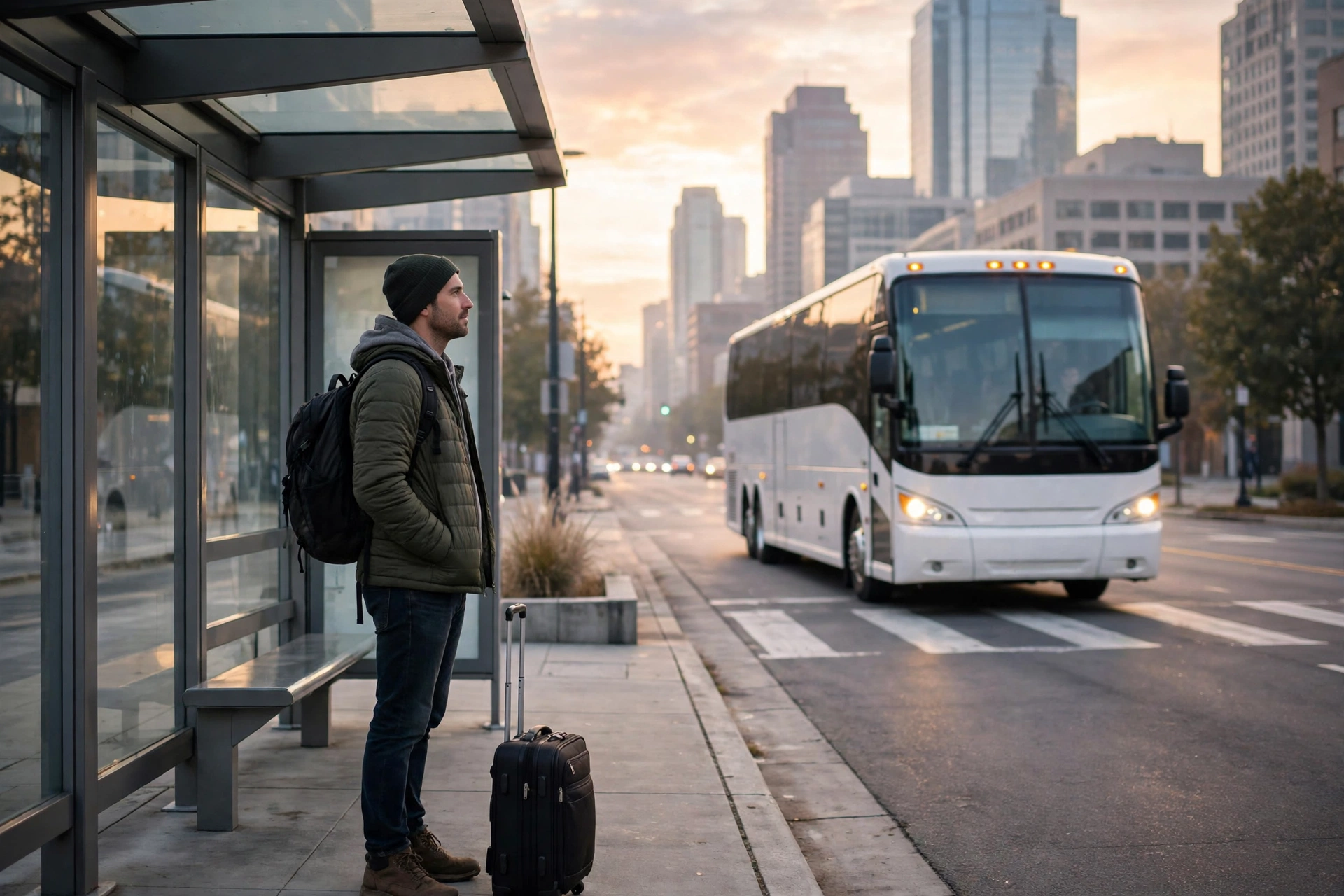
What is the cheapest way to travel in the US?
| Distance | Cheapest option | Why |
|---|---|---|
| Under 300 miles | Bus | Often $17 to $50, with frequent departures |
| 300 to 600 miles | Bus, or driving if 2 or more people share | Gas split 3 or 4 ways beats most fares |
| Over 600 miles | Flying, booked early | Saves a full day or more on the road |
| Scenic routes | Train, on Saver fares | Slower, but the trip is part of the vacation |
Bus: the cheapest way to travel between nearby cities
What is the cheapest way to travel by bus? Book early on the big intercity lines: FlixBus, which also owns Greyhound, Megabus, OurBus and Peter Pan. Prices rise as seats sell, so the earliest bookings get the lowest fares.
- Price: often $17 to $50 between cities a few hundred miles apart
- Speed: slower than the train, and traffic can add an hour
- Good to know: many lines pick up at curbside stops, not stations, and limit you to 1 large bag
For night buses and late arrivals, see our tips on transport safety.
See our full comparison of FlixBus vs Greyhound.
Train: cheap only on Saver fares
Amtrak’s cheapest Saver fares can match the bus on busy routes, but they’re limited, and prices climb fast close to the date. On the Northeast Corridor, between Boston, New York and Washington, trains are faster than the bus and run often. Long-distance trains are slow, but the views make them a trip in themselves.

See our full guide on Amtrak tips and tricks.
Plane: cheapest for long distances
Flying got more expensive in 2026. The average US domestic airfare reached a record $445 in the spring, and that doesn’t include bag or seat fees. A 1-way ticket averaged about $305.
Flying still wins for long distances, like New York to Las Vegas, because it saves 1 or 2 days of travel. To pay less, compare budget airlines with their bag fees included, fly midweek, and book well ahead.

See our full guide on how to find cheap flights.
Car: cheapest for 2 or more people
Gas averaged about $3.98 a gallon in November 2026. A car that gets 25 miles per gallon costs about 16 cents a mile in gas, so a 500-mile trip is about $80. Split 4 ways, that’s $20 each, less than most bus tickets.
Add tolls, parking and, if you rent, the rental fee, taxes and any 1-way drop-off fee. A road trip also lets you stop wherever you like along the way.

Example: the cheapest way to travel from New York to Washington, DC
The 225-mile trip between New York and Washington shows how the options compare:
| Option | 2026 price, 1 way | Time |
|---|---|---|
| Bus | From about $17; about $38 on average | 4 to 6 hours |
| Amtrak Northeast Regional | From $22 on limited Saver fares, often $100 or more close to the date | About 3.5 hours |
| Amtrak Acela | From $59 | About 3 hours |
| Driving | About $36 in gas, plus tolls and parking | 4 to 5 hours |
| Flying | Rarely worth it once you add airport time | Not counted |
The bus is cheapest for 1 person; driving wins for a group, if you have somewhere to park. Visiting New York first? Our NYC travel guide covers getting around the city.
See our list of the 12 best road trips in the US.
How to travel economically in the US
- Book buses and trains as early as you can; the cheapest seats sell first
- Travel midweek, when fares and gas demand are lower
- Compare the total price, with bag fees for flights and tolls and parking for driving
- Split driving costs with friends, or share a rental car
- Use a fare-comparison site that shows buses, trains and flights together
- Pack light, so you can take the cheapest bus or basic economy fare without bag fees

For more ways to save on food, hotels and activities, see our budget travel tips.
FAQ
What is the cheapest way to travel in the US?
The bus, for 1 person on trips under about 600 miles. For 2 or more people, driving and splitting the gas is often cheaper.
What is the cheapest way to travel by bus?
Book early on FlixBus, Greyhound, Megabus or OurBus, travel midweek, and compare all the lines on a fare-comparison site.
Is it cheaper to fly or drive?
Driving is usually cheaper for 2 or more people under about 600 miles. For 1 person or for long distances, flying can cost less once you count the extra days of hotels and food on a long drive.
Is the train cheaper than the bus?
Only on early Saver fares. Most of the time the bus is cheaper, and the train is faster and more comfortable.
Final takeaway
The cheapest way to travel depends on distance and group size: the bus for short trips alone, a shared car for groups, and an early flight for long distances. Book early, compare the total price, and pack light.
Last updated: November 2026
Sources: BTS: second quarter 2026 airfares · BTS: first quarter 2026 airfares · AAA gas prices · Wanderu: New York to Washington bus · OurBus: bus vs Amtrak, NYC to DC
